By Tiarnan O’Kane
The legendary number 7 shirt at Manchester United is more than just a piece of fabric with a digit on the back. It represents a mantle of leadership, charisma, and sheer excellence. To wear it is to bear the weight of history, to be reminded of the giants who came before. But what does it truly take to don that shirt and live up to its legacy? What does it take to not only follow in the footsteps of greatness but to make that legacy your own? In a way, this is not unlike stepping into a business environment where you are expected to follow great mentors and leaders—people who have crafted systems of success that seem almost daunting to replicate.
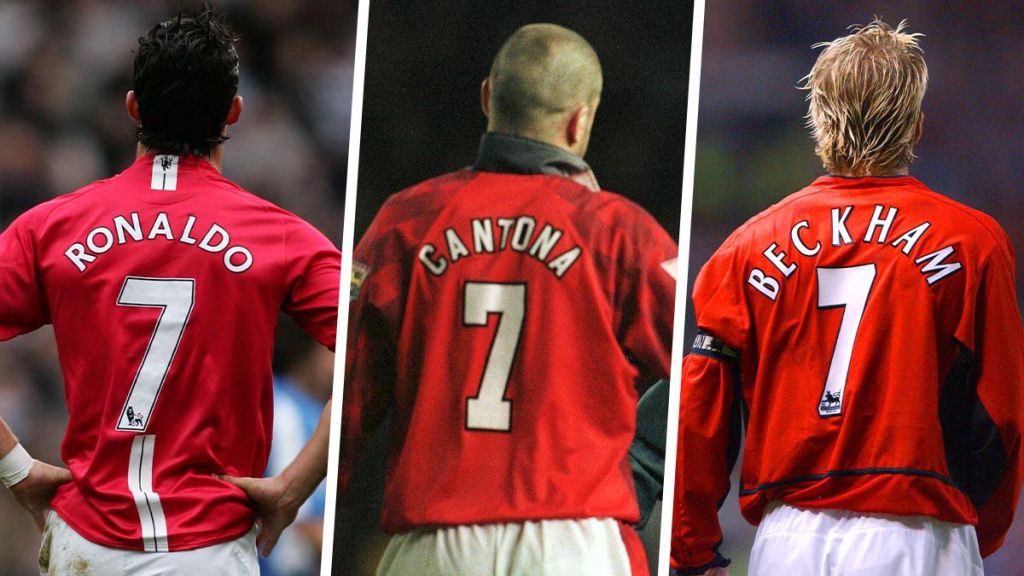
Let’s take a closer look at the men who wore the number 7 for Manchester United: Eric Cantona, David Beckham, and Cristiano Ronaldo. Each of these players embodied a different essence of what it means to wear the number 7, and each showed us that while greatness can be emulated, true excellence is marked by a personal touch—a unique imprint on a well-trodden path.
Eric Cantona: The King and the Catalyst
Eric Cantona didn’t just wear the number 7 shirt; he revolutionized what it meant to play for Manchester United. Cantona was the catalyst that transformed United from a promising team into a dominant force in English football. His style was audacious, his presence commanding, and his influence immeasurable.
Cantona had an almost mythical aura about him—a blend of arrogance and artistry. He wasn’t just a player; he was a leader who inspired those around him to reach their potential. What can we learn from Cantona about stepping into a role marked by greatness? It’s about understanding that you must bring more than skill; you must bring vision. In a business context, this means more than just following established protocols. It’s about bringing a new perspective, challenging the status quo, and leading by example.
David Beckham: The Icon and the Perfectionist
David Beckham’s name is synonymous with the number 7. His image is iconic, his influence global, and his technique unmatched. Beckham wasn’t the most naturally gifted player, but he was the epitome of hard work, dedication, and precision. His free-kicks were masterpieces, the result of hours of relentless practice. Beckham’s tenure at United wasn’t just about individual brilliance; it was about consistency, discipline, and understanding the importance of being a team player.
In business, Beckham’s example teaches us that talent alone is not enough. To make a legacy your own, you must commit to perfecting your craft, to refining your skills until you are not just good but extraordinary. You must also learn to balance personal ambition with team success, ensuring that your contributions elevate those around you.
Cristiano Ronaldo: The Prodigy and the Phenomenon
Cristiano Ronaldo is arguably the greatest to ever wear the number 7 for Manchester United. When Ronaldo first arrived at Old Trafford, he was a raw, talented prodigy. By the time he left, he was a phenomenon—a Ballon d’Or winner, a global superstar. Ronaldo’s work ethic, his relentless pursuit of greatness, and his insatiable hunger to be the best set him apart from the rest.
Ronaldo took the legacy of the number 7 and elevated it to unprecedented heights. He showed that to truly own the number 7 shirt, you must be willing to outwork everyone, to push the boundaries of what’s possible, and to continuously evolve. In a business sense, this translates to never settling for mediocrity, always seeking ways to improve, and being fearless in your pursuit of success.
Making the Number 7 Your Own: Lessons for Business and Life
So, what does it take for someone to step into the number 7 shirt today and make it their own? The answer lies in a combination of emulation and innovation. You must respect the legacy, learn from it, and apply those lessons with an understanding that times have changed, and so must the approach.
In business, the parallel is clear. Stepping into a role with a legacy of success demands that you first learn from those who came before you. Understand their methods, their values, and their strategies. But to truly succeed, you must also bring something new to the table. This might mean adapting to new technologies, finding more efficient ways to achieve goals, or simply offering a fresh perspective that challenges conventional wisdom.
Greatness isn’t just about copying a formula; it’s about understanding the principles behind it and then putting your own spin on it. Just as Cantona, Beckham, and Ronaldo brought their unique qualities to the number 7 shirt, you must bring your individuality to your role. Success in business, much like in football, is about finding that delicate balance between respecting the past and innovating for the future.
Ultimately, wearing the number 7 shirt at Manchester United is about more than just living up to a legacy—it’s about defining your own. In business, following in the footsteps of great leaders requires the same balance of respect and creativity. You must honor the systems that work but also have the courage to make them your own, to put your own stamp on success. Only then can you truly say you’ve not just followed in the footsteps of greatness, but that you’ve walked your own path, and in doing so, become great yourself.
 Tiarnan O'Kane
Leave a comment