By Tiarnan O’Kane
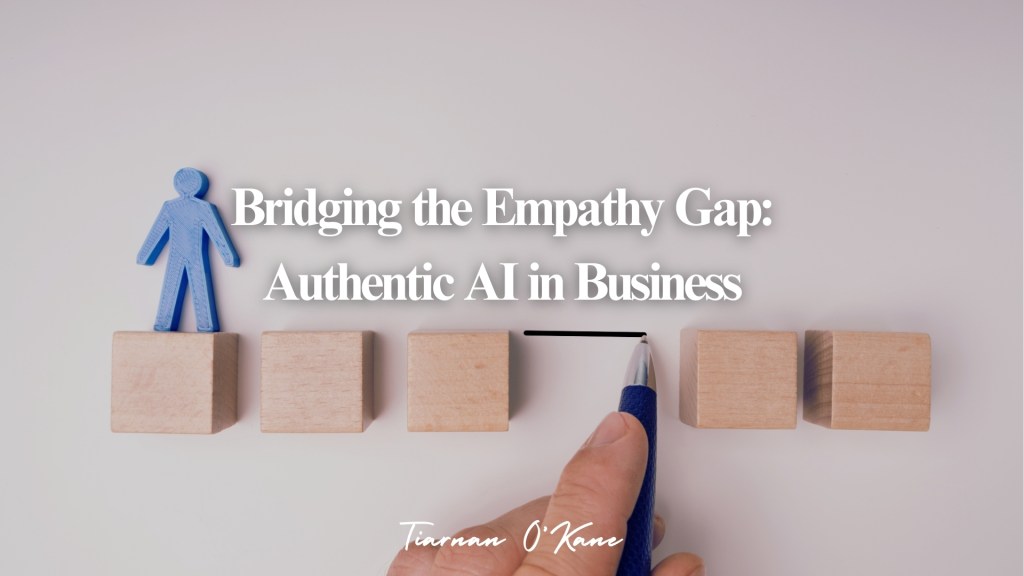
In a world increasingly dominated by artificial intelligence (AI) and machine learning, the question of empathy in business practices becomes more pressing than ever. The advent of sophisticated technologies offers myriad benefits, yet it simultaneously raises concerns about the risk of alienating customers through faceless automation. The empathy gap in AI exemplifies this challenge, and it is incumbent upon us – business leaders and consultants alike – to ensure that human touch remains an intrinsic part of our service delivery.
Understanding the Empathy Gap
The term “empathy gap” refers to the disparity between human emotional connection and the mechanistic responses of AI systems. While AI can process data at unprecedented speeds, it often lacks the understanding and responsiveness associated with human interactions. Consequently, customers may feel disillusioned when interacting with an AI rather than a person. Bridging this gap is essential not merely for customer satisfaction, but also for fostering brand loyalty. Here are several ways businesses can integrate empathy and authenticity when deploying AI.
1. Prioritise Authenticity in AI Interactions
- Human-like responses: Ensure that AI-generated messages mimic human conversational style – this can involve the use of casual language, appropriate humour, and empathetic expressions.
- Personalisation: Leverage customer data to craft personalised experiences that resonate with individual needs and preferences.
- Transparency: Be upfront about when customers are interacting with AI. Acknowledging the technology creates a sense of authenticity and fosters trust.
2. Emotional Intelligence in AI Systems
Incorporating emotional intelligence into AI systems can significantly mitigate the empathy gap. This involves programming AI to identify and respond to emotional cues effectively. Evaluation of customer emotions can occur through:
- Sentiment analysis: Use machine learning algorithms to analyse customer emotions expressed in text or speech, providing nuanced responses.
- Behavioural data: Analyse patterns in customer behaviour to better understand their needs and adjust interactions accordingly.
Building Human-Centric AI Solutions
Creating an AI-enabled solution requires a holistic approach that prioritises human connection. Companies can adopt the following strategies:
1. Involve Diverse Teams in AI Development
Bringing together individuals from various backgrounds – technology, psychology, sociology, and design – can lead to more empathetic AI solutions. Diversity fosters perspectives that ensure products are developed with the end-user in mind, making it easier to address potential emotional disconnects.
2. Continuous Feedback Loop
Establishing a continuous feedback mechanism between AI and customers enhances emotional engagement. This could involve:
- Regular surveys to gauge customer sentiments:
- Open forums for customers to voice frustrations and appreciations;
- Utilising feedback to iterate on AI algorithms and enhance emotional recognition.
3. The Role of Human Oversight
Despite advancements in AI technology, human oversight remains crucial. Customer service representatives should be readily available to step in when AI fails to capture the necessary context or emotion. This seamless blend of AI efficiency and human empathy can significantly enhance customer experience.
The Future of AI: Empathy as a Competitive Advantage
In the competitive landscape, businesses that prioritise empathy in their AI initiatives will have a distinct advantage. The ability to connect with customers on an emotional level will not only foster loyalty but will also set a benchmark for industry standards. Brands must remember that at the heartbeat of any automated system lies the human experience – recognising this will be critical in shaping the future of customer relations.
Conclusion
As we forge ahead into an era dominated by AI, it is vital that we do not lose sight of what makes us fundamentally human: our capacity for empathy and connection. By understanding and bridging the empathy gap, businesses can ensure they remain relevant and respected in the rapidly changing landscape of customer service. Embracing these principles will enable organisations to deploy AI solutions that not only enhance efficiency but also foster authentic connections with their customers. In doing so, we can keep the human touch alive, even amidst the rise of automation.
Empathy is not merely an asset; it is the cornerstone of relationships, paving the way for sustainable growth and meaningful interactions. Let us embrace this challenge and continue to ground our technological advances in human understanding.
#EmpathyInAI #AIandBusiness #CustomerExperience #Authenticity #EmotionalIntelligence #AIIntegration #BusinessConsultancy #HumanTouch #FutureOfAI #DigitalTransformation #tiarnanokane
Looking to explore more insights on blending technology and human connection? Here are some related reads you might find valuable:
The Importance of Human Touch in Business Engagement – Discover why the human touch in business engagement remains a cornerstone of trust and loyalty in the digital age.
Navigating AI and Emotional Understanding: Key Insights – Learn how AI and emotional understanding can work together to enhance authentic customer connections.
The Future of Marketing: Merging AI and Human Insight for Success – Explore the future of marketing by merging AI with human insight for long-term success.
How Over-Automation Is Damaging Customer Loyalty – Understand why over-automation harms customer loyalty and how businesses can avoid this pitfall.
The Vitality Curve: A Modern Approach to Talent Management – Gain perspective on the vitality curve in talent management and its role in shaping modern workplaces.
 Tiarnan O'Kane
Leave a comment