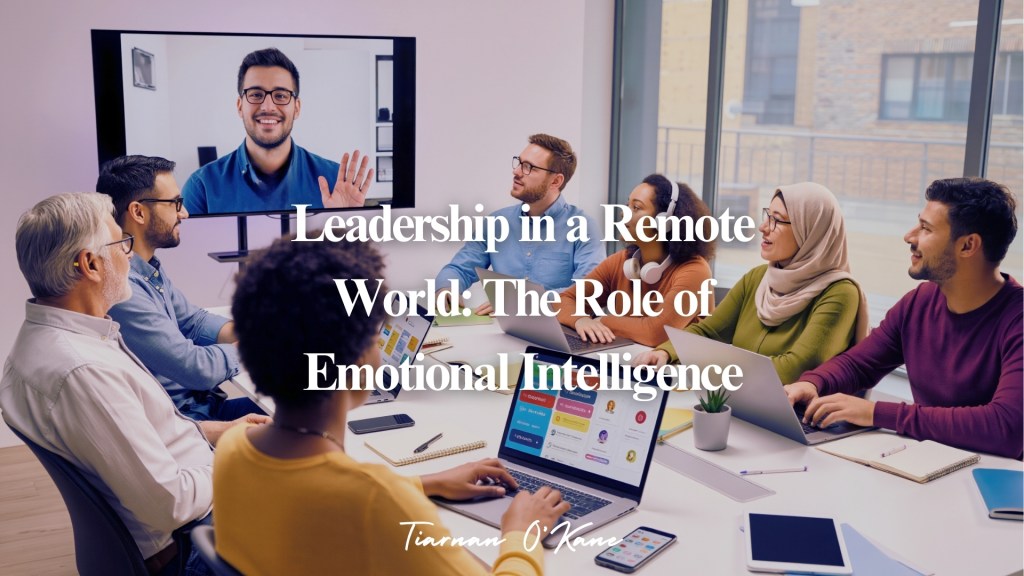
By Tiarnan O’Kane
In today’s rapidly evolving landscape, remote work has transcended mere convenience; it has become a fundamental shift in how we view leadership. The concept of leadership without presence raises profound questions about the essence of connection, trust, and emotional intelligence. As we delve into the complexities of remote-first business environments, we must reflect on what we lose when physical presence is absent, and we need to emphasise how emotional intelligence can not only bridge this gap but also restore the vital elements of presence, trust, and engagement.
The Disconnect of Leadership in a Remote World
Leadership traditionally relied on the immediacy of presence—the unspoken bond formed through eye contact, body language, and spontaneous conversation. In a remote-first world, these elements dissipate, often leaving leaders to communicate exclusively through screens. This disconnect harbours significant challenges:
- Impaired Communication: Nuances can easily be lost in digital interaction.
- Decreased Trust: Without consistent engagement, employees may feel isolated and undervalued.
- Loss of Engagement: The absence of physical presence can lead to diminished team morale.
The Impact of Emotional Intelligence
Emotional intelligence (EI) emerges as a pivotal trait that leaders must cultivate to navigate the complexities inherent in remote leadership. EI encompasses the ability to recognise, understand, and manage one’s own emotions while also empathising with others. Here are ways in which emotional intelligence can restore presence in our teams:
- Active Listening: Leaders should foster a culture that prioritises active listening to address the concerns and emotions of team members.
- Promoting Vulnerability: Acknowledging one’s own struggles or uncertainties can humanise leaders and forge deeper connections.
- Regular Check-ins: Frequent touchpoints can help maintain communication and demonstrate genuine interest in team members’ wellbeing.
Building Trust in a Remote Environment
Trust is not merely a by-product of good leadership; it is the bedrock upon which teams are built. Without face-to-face interactions, fostering trust requires deliberate effort. Here are some strategies leaders can employ:
- Transparency: Sharing information openly cultivates an atmosphere of trust.
- Consistency: Being reliable in communication and decision-making encourages teams to trust their leaders.
- Soliciting Feedback: Actively seeking and responding to feedback establishes a reciprocal relationship between leaders and team members.
Engagement Strategies in the Digital Age
Employee engagement suffers when leaders fail to communicate effectively. The following strategies can enhance engagement, even when teams operate remotely:
- Utilising Technology: Leveraging tools such as video calls, collaborative platforms, and social channels can help recreate some of the benefits of in-person interactions.
- Encouraging Team Interaction: Organising virtual team-building activities fosters camaraderie and strengthens bonds.
- Celebrating Achievements: Recognising and celebrating contributions—big or small—galvanises team spirit.
The Future of Leadership
As we look towards the future, the challenge remains to redefine leadership in a world that may no longer centre on physical presence. Those who can integrate emotional intelligence into their leadership practices will emerge not only as better leaders but as cornerstones of resilient and engaged teams. The journey of leading in a remote-first environment is indeed fraught with challenges, but it also presents rich opportunities for development and growth.
In an increasingly digital world, we must ask ourselves: What kind of leaders do we aspire to be? The answer lies in embracing the very qualities that define our humanity—compassion, understanding, and empathy. By restoring presence through emotional intelligence, we can cultivate deeper connections that transcend the confines of our screens.
Conclusion
The essence of effective leadership rests, at its core, on our ability to connect, engage, and inspire others. As we navigate this new terrain, let us lean into the power of emotional intelligence. By doing so, we not only enhance our leadership capacity but also fortify the bonds of trust and engagement that are crucial for navigating the complexities of a remote-first world.
In conclusion, leadership without presence is not merely a challenge but an opportunity—a challenge that calls for a renewed focus on the emotional fabric that binds us as teams. As we traverse these uncharted waters, let us embody the true spirit of leadership, one that is anchored in presence, trust, and genuine human connection.
Embrace the future, cultivate emotional intelligence, and lead with integrity.
#Leadership #RemoteWork #EmotionalIntelligence #TeamEngagement #Trust #Communication #ActiveListening #RemoteLeadership #VirtualTeams #BusinessConsulting #tiarnanokane
 Tiarnan O'Kane
Leave a comment