By Tiarnan O’Kane
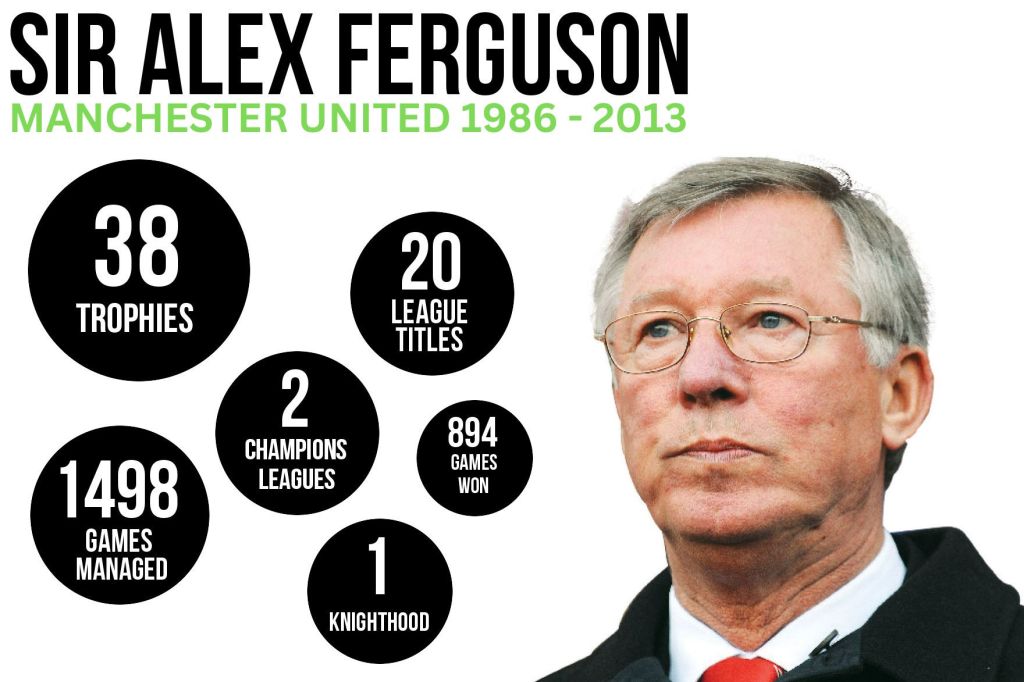
As a lifelong Manchester United supporter, the privilege of witnessing the reign of Sir Alex Ferguson is something that shall remain etched in my memory until my dying day. Sir Alex, the man who transformed United into a global footballing powerhouse, was not merely a tactician of the highest order. He was, more fundamentally, a master of man-management, an aspect of his genius that has been discussed, analysed, and revered across the world.
One must appreciate that football, at its core, is a human endeavour, replete with the complexities of personality, emotion, and ambition. Managing a football team, particularly one as globally significant as Manchester United, is less about moving pieces on a chessboard and more about understanding the intricate dynamics of human nature. Sir Alex Ferguson, with his deep understanding of this, elevated himself beyond the realm of mere football managers and into the pantheon of great leaders.
Nurturing Young Talent: A Legacy of Trust and Development
Perhaps one of the most compelling aspects of Ferguson’s man-management was his unwavering commitment to nurturing young talent. The Class of ’92—Ryan Giggs, David Beckham, Paul Scholes, Gary Neville, Phil Neville, and Nicky Butt—serves as a testament to his belief in the potential of youth. While many managers would hesitate to place their faith in unproven teenagers, Sir Alex saw beyond their rawness, recognising their potential and, crucially, creating an environment in which that potential could be realised.
But nurturing young talent is not merely about providing opportunities; it is about instilling a sense of trust. Ferguson did not merely put these youngsters on the pitch; he trusted them with the responsibility of upholding the club’s legacy. This trust was reciprocated by the players, who, in turn, were motivated to repay it with performances that transcended their years. It is a remarkable demonstration of the psychological contract between a leader and his followers—one built on mutual respect and belief.
Managing Egos: The Balance of Power and Control
In any team, particularly one composed of elite athletes, egos are bound to flourish. Managing these egos without allowing them to disrupt team harmony is a delicate balancing act, and here Ferguson excelled. His relationship with players like Eric Cantona, Roy Keane, and Cristiano Ronaldo highlights his nuanced approach.
Ferguson understood that certain players required a different approach—a more hands-off, autonomous style that allowed their natural flair to shine. Eric Cantona, for instance, was afforded a degree of freedom both on and off the pitch, with Ferguson recognising that such latitude was essential for Cantona to perform at his best. It was a gamble, but one that paid dividends as Cantona became the catalyst for United’s dominance in the mid-90s.
However, Ferguson was equally adept at exerting control when necessary. Roy Keane, a player whose leadership and influence were unparalleled, was also a volatile figure. Ferguson’s handling of Keane, particularly towards the end of the Irishman’s United career, demonstrates the manager’s willingness to assert his authority, even at the risk of upsetting a club legend. It was a reminder that no individual, no matter how talented or influential, was bigger than the club.
Keeping Star Players Motivated: The Challenge of Sustained Success
Motivating players at the pinnacle of their careers, who have achieved nearly everything there is to achieve, is a challenge that would daunt even the most seasoned managers. Yet, Sir Alex Ferguson consistently found ways to keep his players hungry for success.
One of his key strategies was to foster a culture of constant improvement. Ferguson was never one to rest on his laurels; his teams, no matter how successful, were always pushed to find new heights. This relentless pursuit of excellence became ingrained in the players’ psyche, ensuring that complacency never set in.
Moreover, Ferguson had an uncanny ability to refresh his squad with just the right mix of new talent and experienced heads, ensuring that there was always a sense of competition within the team. This competition kept everyone on their toes, from the seasoned veterans to the up-and-coming stars. The likes of Ryan Giggs and Paul Scholes, who enjoyed two-decade-long careers at the club, never felt secure enough to take their positions for granted—a testament to Ferguson’s motivational prowess.
The Power of Personal Relationships
Ferguson’s success in man-management was also rooted in his ability to build personal relationships with his players. He was known for taking a genuine interest in their lives off the pitch, understanding their backgrounds, and supporting them through personal challenges. This personal touch fostered a deep loyalty among his players, who often referred to him as a father figure.
But Ferguson was not merely a comforting presence; he was also a figure of authority, whose expectations were clear and whose standards were non-negotiable. This combination of empathy and discipline is perhaps the hallmark of his man-management style. It allowed him to build teams that were not just talented, but also resilient, united, and driven by a shared purpose.
Conclusion: Lessons for Leaders Beyond Football
The lessons we can draw from Sir Alex Ferguson’s approach to man-management extend far beyond the football pitch. His ability to nurture talent, manage egos, keep his team motivated, and build strong personal relationships provides a blueprint for leadership in any field. In an era where the human element is often overlooked in favour of data and analytics, Ferguson’s legacy serves as a powerful reminder that the most successful leaders are those who understand and harness the complexities of human nature.
As a lifelong Manchester United supporter, I am eternally grateful for the years of success that Sir Alex brought to our club. But beyond the trophies and titles, it is his mastery of man-management that stands out as his most enduring legacy—a legacy that will continue to inspire leaders in all walks of life for generations to come.
 Tiarnan O'Kane
Leave a comment