By Tiarnan O’Kane
In the intricate art of Kintsugi, a traditional Japanese practice, broken pottery is not merely repaired; it is transformed. The cracks and fractures, once viewed as flaws, are filled with lacquer mixed with powdered gold, silver, or platinum. The object, now restored, stands as a testament to its history and resilience, with its imperfections not just acknowledged but celebrated. This practice, deeply symbolic, offers a profound lesson in how we might approach the inevitable challenges and setbacks of life.
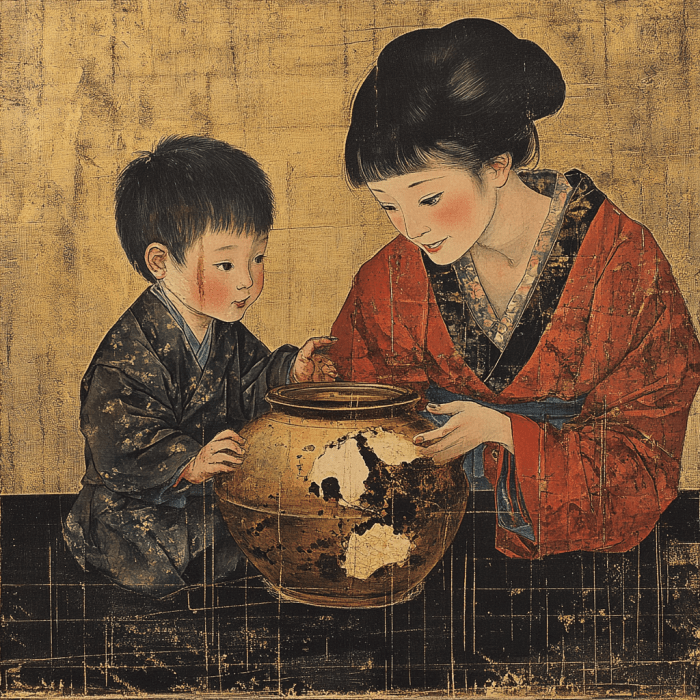
Now, let us consider a scenario where a child, in a moment of carelessness, drops a pot, shattering it into countless pieces. The typical response in many households might be one of frustration or reprimand—a swift rebuke for the child’s perceived clumsiness or lack of attention. However, in the context of Kintsugi, a different, more constructive approach emerges. Instead of punishing the child for their mistake, Japanese parents might choose to involve them in the process of repairing the broken pot with gold, transforming the incident into an educational experience.
The Lessons of Kintsugi in Parenting
The decision to repair a broken item through Kintsugi is not merely an act of restoration; it is a deliberate choice to impart a set of values that are increasingly rare in our fast-paced, often unforgiving world. Here are the key lessons that Kintsugi imparts, particularly when applied to parenting:
- Mistakes Are Not the End: By involving the child in the process of repairing the pot, parents are conveying a crucial message: mistakes are not final. They do not signify the end of value but rather an opportunity for transformation. This lesson encourages children to perceive their own errors not as failures, but as vital components of growth and learning.
- Embracing Imperfection: The repaired pot, adorned with golden seams, becomes more beautiful precisely because of its imperfections. This is a lesson in embracing one’s own flaws and the inherent challenges of life. It teaches children that their worth is not diminished by their imperfections; rather, it is through these imperfections that they become unique and resilient.
- Valuing and Respecting What We Have: By choosing to repair rather than discard the broken pot, parents demonstrate the importance of valuing and respecting what we possess—whether it be material objects, relationships, or personal experiences. This lesson fosters a sense of responsibility and gratitude in children, encouraging them to appreciate and care for what they have.
- Resilience and Recovery: The Kintsugi process illustrates that even when things fall apart, they can be rebuilt. This is a powerful metaphor for resilience, teaching children that they possess the ability to recover from setbacks and emerge stronger and more complete. It is a lesson in fortitude, in the determination to rebuild and grow in the face of adversity.
Applying Kintsugi to Life’s Challenges
Life, as we all know, has a tendency to challenge us in ways that can feel overwhelming, even shattering. We encounter setbacks, failures, and disappointments that can leave us feeling fragmented, unsure of how to piece our lives back together. But the lesson of Kintsugi, as imparted by these Japanese parents, is clear: our brokenness need not be hidden or denied. Instead, it can be embraced, repaired with the “gold” of wisdom, love, and resilience.
Just as the repaired pot, with its golden seams, becomes a cherished item—a symbol of strength and beauty—so too can our lives, marked by the scars of our experiences, become richer and more meaningful. When life attempts to break you, remember the lesson of Kintsugi. Embrace your imperfections, learn from your mistakes, and use them to create a life that is not merely patched together, but transformed—beautiful in its resilience, stronger in its resolve.
This is the essence of Kintsugi: a celebration of the human spirit, unbroken by the trials of life, and elevated by the very challenges that sought to defeat it.
 Tiarnan O'Kane
Leave a comment